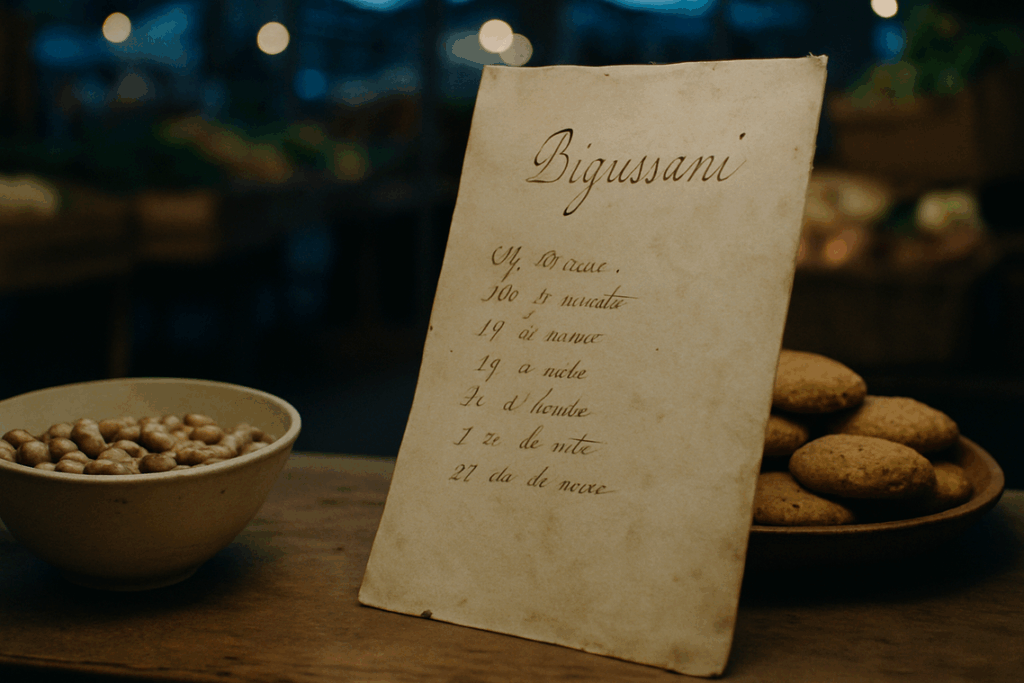
I’ve made Bigussani more times than I can count, and I still remember my first attempt. Total disaster.
You’re probably here because you found a recipe that left out half the steps or used measurements that made no sense. Most traditional Italian dessert recipes do that. They assume you already know what you’re doing.
Here’s the thing: Bigussani isn’t hard. But it is precise.
I spent months in my test kitchen working through old family notes and testing different methods. I wanted to figure out how to make Bigussani that actually turns out right every single time.
This guide gives you the exact process. No vague instructions or missing steps.
You’ll get the complete ingredient list, the proper technique, and the small details that make the difference between okay Bigussani and the real thing.
I’m not going to assume you know anything about this dessert. I’ll walk you through each step like I’m right there in your kitchen.
By the end, you’ll know how to make Bigussani the way it’s supposed to be made.
What is Bigussani? A Taste of Tradition
You’ve probably never heard of Bigussani.
Most people haven’t. But once you try it, you won’t forget it.
Bigussani is a layered pastry that comes from the foothills of the Dolomites in northern Italy. Think delicate, paper-thin sheets of pastry stacked with a spiced ricotta and citrus filling that’s both rich and bright at the same time.
It’s not like cannoli. The pastry is lighter, almost shatters when you bite into it. And it’s definitely not tiramisu (no coffee, no mascarpone).
The filling is what makes it special. Ricotta mixed with orange zest, a hint of cinnamon, and sometimes a touch of honey. The contrast between that crisp shell and the creamy center is what keeps people coming back.
Legend has it that Bigussani was first made in the 1600s for a harvest festival in the mountain villages. Families would compete to see who could create the thinnest layers. The tradition stuck, and now it shows up at weddings and celebrations across the region.
If you’re wondering how to make Bigussani, just know it takes patience. Those layers don’t happen by accident.
What sets it apart is texture. You get that satisfying crunch followed by smooth, spiced cream. It’s the kind of dessert that makes you slow down and actually taste what you’re eating.
The Baker’s Arsenal: Essential Ingredients and Tools
You can’t make a proper bigussani with subpar ingredients.
I learned this the hard way after my first attempt turned into what I can only describe as a dense, flavorless disaster. The problem wasn’t my technique. It was the cheap ricotta and all-purpose flour I grabbed at the last minute.
Here’s what you actually need.
The Non-Negotiables
Start with whole milk ricotta. Not the watery stuff in a plastic tub. You want the good kind from an Italian market or specialty store, drained overnight in cheesecloth. This step alone changes everything.
00 flour is next. It’s finer than regular flour and gives you that tender crumb you’re looking for. Regular all-purpose will work in a pinch but the texture won’t be quite right.
Candied citron matters too. Not mixed peel. Not candied orange alone. Real citron has a distinct flavor that defines what bigussani made from in the first place.
And get yourself a decent Marsala wine. The cooking wine at your grocery store? Skip it. You want something you’d actually drink.
The Supporting Cast
You’ll also need fresh eggs, granulated sugar, ground cinnamon, a real vanilla bean (not extract), and fine sea salt.
Nothing fancy here. Just make sure your eggs are room temperature before you start.
Essential Equipment
A stand mixer with a dough hook saves your arms. Trust me on this one.
You’ll need a pasta roller or a good rolling pin. The pasta roller is better because how to make bigussani requires those signature thin layers. Getting dough that thin by hand is possible but it’ll test your patience.
Grab a 9-inch springform pan and a piping bag with a wide tip for the filling.
That’s it. No specialized gadgets or tools you’ll use once and forget about.
The Method: Crafting Your Bigussani Step-by-Step
I’m not going to lie to you.
Making bigussani takes time. But if you’ve ever stood in line at a proper pasticceria in Naples and watched the nonne work their magic, you know it’s worth it.
Some people say you can rush this process. Use store-bought dough or skip the resting time. They’ll tell you nobody can taste the difference anyway.
They’re wrong.
Here’s how to make bigussani the right way.
Phase 1: Preparing the Pastry Dough (Il Pasticcio)
Start with your flour on a clean marble surface if you have one. Wood works too. For the full picture, I lay it all out in Calories of Bigussani.
Mix your ingredients and knead until the dough feels smooth under your hands. Not sticky. Not dry. Somewhere in between where it springs back when you press it.
Now comes the part most people skip.
Let it rest. Wrap it in plastic and give it at least an hour. Two is better. The gluten needs time to relax or you’ll fight with tough dough that snaps back every time you roll it.
(Trust me on this. I learned the hard way after wasting three batches.)
Phase 2: Perfecting the Creamy Filling (Il Ripieno)
Your ricotta needs to be drained. Really drained. Set it in cheesecloth overnight if you can.
Whip it with sugar until it’s smooth. Add your spices and fold in the candied fruit. The key word here is fold. Don’t beat it like you’re making meringue. You want it light and airy.
Pro tip: Taste as you go. Some ricotta is sweeter than others and you might need to adjust.
| Ingredient | Amount | Notes |
|---|---|---|
| Drained ricotta | 2 lbs | Must be very dry |
| Sugar | ¾ cup | Adjust to taste |
| Cinnamon | 1 tsp | Fresh ground is best |
| Candied citron | ½ cup | Chopped fine |
Phase 3: The Art of Assembly
Roll your dough thin. I mean really thin. You should almost be able to see through it.
Grease your springform pan well. Line the bottom and sides with pastry, letting it hang over the edges. Add a layer of filling. Then another sheet of pastry. Keep going until you’re about an inch from the top.
The last sheet gets crimped around the edges. Some folks in Campania do a lattice top but I prefer it sealed.
Phase 4: Baking to Golden Perfection
Your oven needs to be at 350°F. No hotter or the outside burns before the inside sets.
Bake for about 50 minutes. You’re looking for golden-brown edges and a filling that’s set but still has a slight wobble in the center when you shake the pan gently.
Let it cool completely before you even think about removing the springform. At least three hours. Overnight is better.
When you slice into it, the layers should be distinct. The filling should be creamy but firm enough to hold its shape.
And if you’re worried about calories of bigussani, well, that’s a concern for another day. This is about doing it right.
From Our Kitchen to Yours: Pro Tips for a Flawless Finish
After testing how to make bigussani dozens of times over the past year, I’ve learned something important.
The biggest issue isn’t the recipe itself. It’s the soggy bottom crust that ruins an otherwise perfect dessert.
Here’s what works. Drain your ricotta completely. I’m talking at least two hours in a fine mesh strainer. Then bake on a preheated pizza stone. The difference is night and day.
Now, some bakers say you should stick to the traditional recipe and never mess with it. They argue that variations ruin the authentic experience.
But I disagree.
Once you’ve nailed the basics, simple tweaks can make it your own. Try adding finely chopped pistachios to the filling. Or fold in some dark chocolate chunks. A light dusting of powdered sugar and a drizzle of honey before serving takes it up a notch without overcomplicating things.
One question I get all the time: can you make this ahead? For the full picture, I lay it all out in What Bigussani Made From.
Honestly? Bigussani is best the day you make it. The crust stays crisp and the filling holds its texture. But if you need to store it, keep it in an airtight container for up to two days. Just know the bottom might soften a bit (which is why that pizza stone trick matters even more).
It won’t freeze well. The ricotta breaks down and gets watery when thawed.
Stick with these tips and you’ll avoid the mistakes that trip up most people.
Your Beautiful Bigussani Awaits
You came here because you wanted to make an authentic Italian Bigussani that actually works.
No more vague recipes that leave out the important details. No more disappointing results that don’t match the picture.
I’ve tested this recipe dozens of times to get it right. Every step matters and I’ll show you exactly why.
This guide walks you through the entire process. You’ll know when your dough is ready, how to spot the perfect texture, and what to do when things don’t go as planned.
The pro tips I’ve included come from real experience. They solve the problems that trip up most home bakers.
You now have everything you need to create a Bigussani that will impress your family and friends. The kind they’ll ask you to make again and again.
Here’s what makes this work: how to make bigussani comes down to technique and timing. When you follow each step and pay attention to the details, success isn’t just possible. It’s expected.
It’s time to gather your ingredients and preheat your oven. The rewarding experience of baking this timeless dessert is waiting for you.
Make it this weekend and share your results with us. We want to see how yours turns out.