
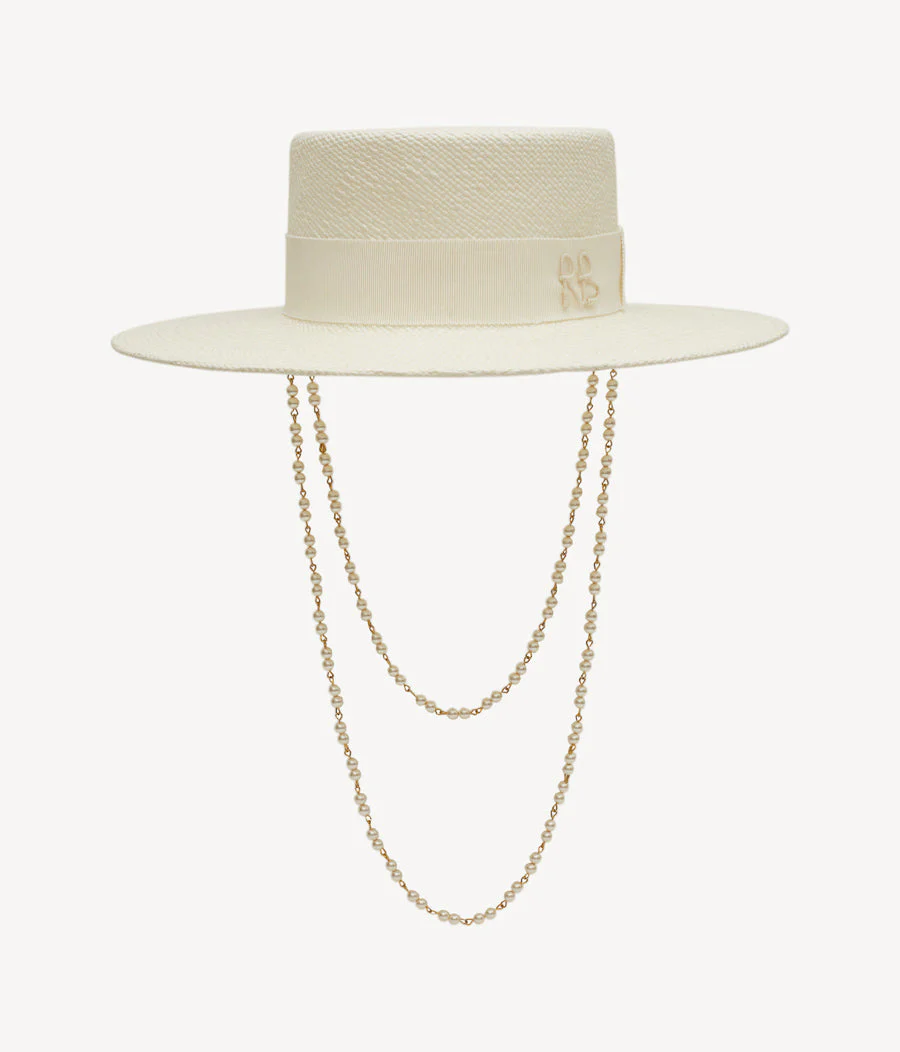
Some pieces take their time to come back into style. And the straw boater hat is a perfect example. Once a simple work hat, it has slowly turned into a fashion favorite with real character. Its story runs through centuries of craftsmanship, tradition, and shifting trends, which gives it a kind of quiet charm. And now it’s back in the spotlight again, looking more relevant than ever.
Venetian Origins: Straw, Water, and Gondoliers
The boater hat was invented in Venice in the 19th century. Gondoliers used it as a protection from the glare of the sun while they were on the water. It was a hardy thing and held its shape even in high humidity. The families recognized the gondoliers by the color and ribbon of their hats.
Over time, Venetian craftsmen turned this simple working hat into a stylish accessory. The ribbon wasn’t just decoration — its color showed which gondolier group or family someone belonged to. Today, it’s mostly just a classic detail that gives the boater its recognizable look.
The Path to Parisian Chic
The boater had made its way across the Alps and reached France by the end of the 19th century. Parisians quickly appreciated the geometric purity of its silhouette and versatility. The hat became an essential accessory for summer strolls, boating regattas on the Seine, and picnics in the Bois de Boulogne.
Impressionists — Manet, Renoir, and Seurat — immortalized it on their canvases, turning it into a symbol of an era of carefree elegance. The boater was loved for its qualities that remain relevant today:
- clear, architectural geometry of its form;
- versatility in both men’s and women’s wardrobes;
- lightness of natural straw fibers;
- ability to play with colored ribbons;
- connection with art and bohemianism;
- timelessness to seasonal fashion;
- ability to serve as an accent.
It was the combination of these qualities that secured the boater’s place in fashion history and paved the way for its further transformation in the 20th century.
The Era of Dandies and Music Halls
At the beginning of the 20th century, the boater hat became firmly established in men’s wardrobes as part of a gentleman’s summer attire. Maurice Chevalier made it his signature hat, and British students at Eton and Oxford wore it with particular pride. The hat became a symbol of education, light humor, and effortless dignity.
At the same time, an interesting transformation was taking place. Women also embraced this silhouette. Coco Chanel, always sensitive to masculine dress codes, introduced the boater hat into the women’s wardrobe and turned it into a manifesto of freedom from Victorian conventions. Since then, the hat has completely lost its gender identity and become a universal style language.
A Modern Reading of the Classics
Today, the boater hat is experiencing a new wave of popularity, and for good reason. As we grow weary of passing trends, we embrace designs that have history and character.
Modern artisans, especially Ruslan Baginskiy, are redefining the classic silhouette with fresh depth and character. The band may be wider, the crown higher, and the brim sharper, but the essence remains the same.
Today, the boater hat is worn with a wide variety of silhouettes and in the most unexpected contexts. This accessory looks equally at home in several situations:
- at a summer wedding by the sea;
- during a gallery stroll;
- on a trip to Italian cities;
- at a spontaneous dinner in the garden;
- when working from an outdoor terrace;
- at a music festival in the park.
The boater hat’s amazing versatility and ability to enhance any outfit without appearing too showy are showcased as it takes on new roles in each of these situations.
Conclusion
The history of the boater is a reminder that true classic forms don’t need a reboot; they require a clever interpretation. Ruslan Baginskiy continues this tradition, creating hats that evoke Venetian simplicity, Parisian elegance, and contemporary architectural precision. Some objects carry their history lightly. The boater is one of them.
 Anne Rigginswavel is the kind of writer who genuinely cannot publish something without checking it twice. Maybe three times. They came to unique finds through years of hands-on work rather than theory, which means the things they writes about — Unique Finds, Trending Now in Retail, Smart Buying Guides, among other areas — are things they has actually tested, questioned, and revised opinions on more than once.
That shows in the work. Anne's pieces tend to go a level deeper than most. Not in a way that becomes unreadable, but in a way that makes you realize you'd been missing something important. They has a habit of finding the detail that everybody else glosses over and making it the center of the story — which sounds simple, but takes a rare combination of curiosity and patience to pull off consistently. The writing never feels rushed. It feels like someone who sat with the subject long enough to actually understand it.
Outside of specific topics, what Anne cares about most is whether the reader walks away with something useful. Not impressed. Not entertained. Useful. That's a harder bar to clear than it sounds, and they clears it more often than not — which is why readers tend to remember Anne's articles long after they've forgotten the headline.
Anne Rigginswavel is the kind of writer who genuinely cannot publish something without checking it twice. Maybe three times. They came to unique finds through years of hands-on work rather than theory, which means the things they writes about — Unique Finds, Trending Now in Retail, Smart Buying Guides, among other areas — are things they has actually tested, questioned, and revised opinions on more than once.
That shows in the work. Anne's pieces tend to go a level deeper than most. Not in a way that becomes unreadable, but in a way that makes you realize you'd been missing something important. They has a habit of finding the detail that everybody else glosses over and making it the center of the story — which sounds simple, but takes a rare combination of curiosity and patience to pull off consistently. The writing never feels rushed. It feels like someone who sat with the subject long enough to actually understand it.
Outside of specific topics, what Anne cares about most is whether the reader walks away with something useful. Not impressed. Not entertained. Useful. That's a harder bar to clear than it sounds, and they clears it more often than not — which is why readers tend to remember Anne's articles long after they've forgotten the headline.