Ever walked into a room and felt like you’ve seen it a million times before? That’s the “sea of sameness” in home decor. We all crave spaces that scream ‘us,’ not some cookie-cutter design.
This guide promises to show you how to find and style rare vintage furniture that tells a story. I’ve got a knack for tracking interior design trends (think of me as your fashion editor for home spaces). We’ll dive into not just what to look for, but how to weave these timeless gems into your modern, trend-savvy home.
Ready to transform your space? Let’s go.
Your Home Narrative: Antique Statement Magic
Ever walked into a room and felt like something was missing? That’s the power of rare vintage furniture at work. When you bring in a piece with a story, it’s like giving your home a voice.
Narrative decor isn’t just about looks or era. It’s about depth, character, and the past creating a dialogue with the present.
Look at older furniture. Crafted with care, dovetail joints hugging solid wood like old friends. Compare that to modern fast furniture (flimsy,) flat-packed shells that barely survive a move.
Older pieces? They’re built to last. They practically scoff at time.
And you know what’s even better? Antique pieces are eco-friendly heroes. You’re not just buying furniture; you’re supporting a circular economy.
That’s sustainability without the preachiness. For those who crave conscious consumerism, antique is the choice.
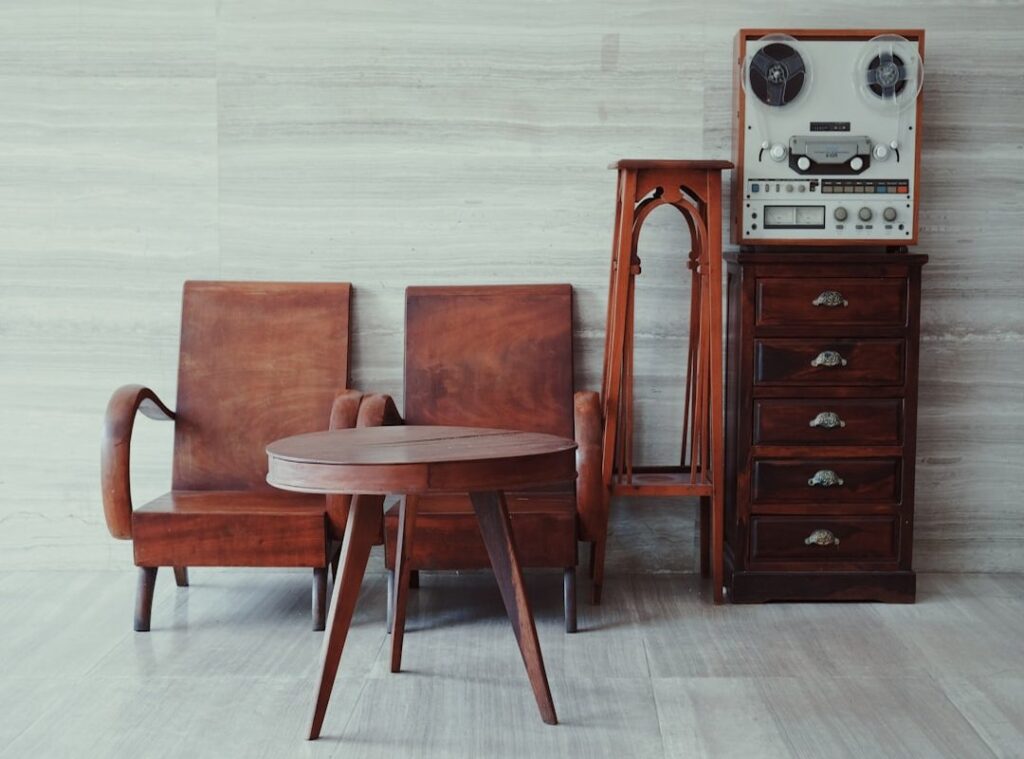
Imagine a weathered apothecary cabinet. It doesn’t just hold your trinkets; it commands the space. Or a mid-century armchair that dictates terms: sit here, feel timeless.
These pieces can single-handedly transform a space from bland to bold. They’re not just furniture; they’re storytellers.
Pro tip: Next time you’re hunting for a unique centerpiece, consider the charm of rare vintage pieces. They make a room come alive. And while you’re at it, discover hidden gem fashion brands discover.
Who knows? You might just find the perfect pairing.
Isn’t it time your home had a story worth telling?
The Modern Antique Hunter’s Guide: Where to Find True Gems
Finding true gems in the world of antiques isn’t about stumbling into a shop and hoping for the best. It’s a game of plan, a thrilling hunt with a high-low approach. Start at the top.
If you want trustworthy and curated options, online marketplaces like Chairish and 1stDibs are your go-to. They’re where you find verified pieces and specific designers. The upside?
You know what you’re getting. The downside? You pay for that certainty.
But when you’re hunting for rare vintage furniture, sometimes it’s worth it.
Now, let’s talk about the hidden gems where the thrill of discovery is real. Modern digital methods are a game changer. Set up alerts on Facebook Marketplace using specific keywords.
It’s like setting traps for the best catches. Follow niche antique dealers on Instagram. They often post their newest finds before they hit the market.
And don’t forget estate sale finder apps. EstateSales.NET is a favorite. It’s like having a treasure map on your phone.
What about the in-person thrill? Flea markets and consignment stores still hold their charm. But don’t just show up.
Have a plan. Bring a go-kit: tape measure, flashlight, and room in your vehicle. You never know when you’ll find that perfect piece that needs a ride home.
And when negotiating, do it respectfully. Nobody likes a pushy buyer, and sometimes a little politeness gets you a better deal.
So, what’s your style? High-end or hidden gem? There’s no one right way to hunt for antiques.
It’s about mixing strategies and trusting your instincts. And let’s be honest, sometimes it’s about luck too. The right piece at the right time.
That’s the magic of antique hunting. You never really know what you’ll find, but that’s what makes it fun.
Spotting Potential: Fresh Finds, Not Frumpy
You don’t need a time machine to find rare vintage furniture that feels fresh. It’s all about developing a curator’s eye. It’s not age that matters, but form and potential.

Let’s focus on what I call “The Big Three”: Silhouette, Material, and Detail. These are the true markers of a piece’s charm.
A great silhouette is timeless. Think of a clean-lined Art Deco sideboard. It’s not just a piece of furniture; it’s a statement.
Then there’s material. Unique materials like burl wood or aged brass add texture and depth. You can’t fake that kind of character.
Details matter too. Original hardware or detailed carvings can transform a piece from ordinary to extraordinary. It’s these little touches that catch the eye and hold it.
But let’s not get too distracted.
When you’re hunting, look for pieces with “Good Bones”. Solid wood construction is a must. Sturdy legs can be a game changer.
And don’t forget smooth-gliding drawers. These are the essentials. Surface-level flaws like chipped paint or faded fabric?
Easily updated. Don’t let them deter you.
Now, let’s talk red flags. Severe water damage is a no-go. Musty smells that won’t go away?
Avoid. And if you see signs of active pests, walk away. Fast.
It’s about protecting your investment and sanity.
Oh, and here’s a pro tip: always consider how a piece will fit with your existing style. Sometimes a vintage find can raise a space. Other times it just feels out of place.
Trust your instincts.
And speaking of style, if you’re into unique finds, you might want to explore artisan jewelry designers support. They offer some great takeaways into craftsmanship that’s hard to find. It’s all about finding pieces that connect with you.
Styling Secrets: Mix Antiques with Modern Decor
Afraid your home might end up looking like a stuffy museum? I get it. No one wants to live in a historical exhibit.
The key is balance. Let me introduce you to the 80/20 Rule. Keep 80% of your space modern and 20% antique.
This way, rare vintage furniture can shine without overwhelming your vibe.
Let’s get into some styling recipes. Start with juxtaposition. Pair an ornate, gilded mirror over a sleek, minimalist console.
It’s like having the best of both worlds, right there in your hallway. Then there’s the function swap. Ever thought of using a vintage barrister’s bookcase as a modern bar cabinet?
Or a small wooden chest as a side table? It’s a game-changer. Not everything needs to stay in its lane.
Finally, color cohesion is your friend. Throw pillows in a shared color palette can magically unify a modern sofa and an antique chair. Trust me, it’s easier than it sounds.
And if you’re still worried about getting it wrong, remember: nothing’s permanent. You can always change things up. Pro tip: keep your eyes peeled for pieces that tell a story (they’re conversation starters).
Styling is personal, so make it yours.
Craft a Space That Speaks You
Ever felt like your home was just another cookie-cutter space? You’re not alone. The whole world’s swimming in mass-produced decor.
But there’s a solution. By going for rare vintage furniture, you add personality, style, and sustainability to your home. How good does that sound?
It’s like your home tells a story. Your story.
Ready to start? Go out there and find that one perfect piece. Get inspired.
Explore style guides and discover more treasures. Trust me, you’ll thank yourself later. Don’t wait for the world to catch up with your style.
Make it yours now. Start small. Think big.
 There is a specific skill involved in explaining something clearly — one that is completely separate from actually knowing the subject. Kylor Eldwain has both. They has spent years working with consumer style spotlights in a hands-on capacity, and an equal amount of time figuring out how to translate that experience into writing that people with different backgrounds can actually absorb and use.
Kylor tends to approach complex subjects — Consumer Style Spotlights, Shopping Trends and Must-Haves, Trending Now in Retail being good examples — by starting with what the reader already knows, then building outward from there rather than dropping them in the deep end. It sounds like a small thing. In practice it makes a significant difference in whether someone finishes the article or abandons it halfway through. They is also good at knowing when to stop — a surprisingly underrated skill. Some writers bury useful information under so many caveats and qualifications that the point disappears. Kylor knows where the point is and gets there without too many detours.
The practical effect of all this is that people who read Kylor's work tend to come away actually capable of doing something with it. Not just vaguely informed — actually capable. For a writer working in consumer style spotlights, that is probably the best possible outcome, and it's the standard Kylor holds they's own work to.
There is a specific skill involved in explaining something clearly — one that is completely separate from actually knowing the subject. Kylor Eldwain has both. They has spent years working with consumer style spotlights in a hands-on capacity, and an equal amount of time figuring out how to translate that experience into writing that people with different backgrounds can actually absorb and use.
Kylor tends to approach complex subjects — Consumer Style Spotlights, Shopping Trends and Must-Haves, Trending Now in Retail being good examples — by starting with what the reader already knows, then building outward from there rather than dropping them in the deep end. It sounds like a small thing. In practice it makes a significant difference in whether someone finishes the article or abandons it halfway through. They is also good at knowing when to stop — a surprisingly underrated skill. Some writers bury useful information under so many caveats and qualifications that the point disappears. Kylor knows where the point is and gets there without too many detours.
The practical effect of all this is that people who read Kylor's work tend to come away actually capable of doing something with it. Not just vaguely informed — actually capable. For a writer working in consumer style spotlights, that is probably the best possible outcome, and it's the standard Kylor holds they's own work to.